UNMUZZLED The K9 Accountability Series
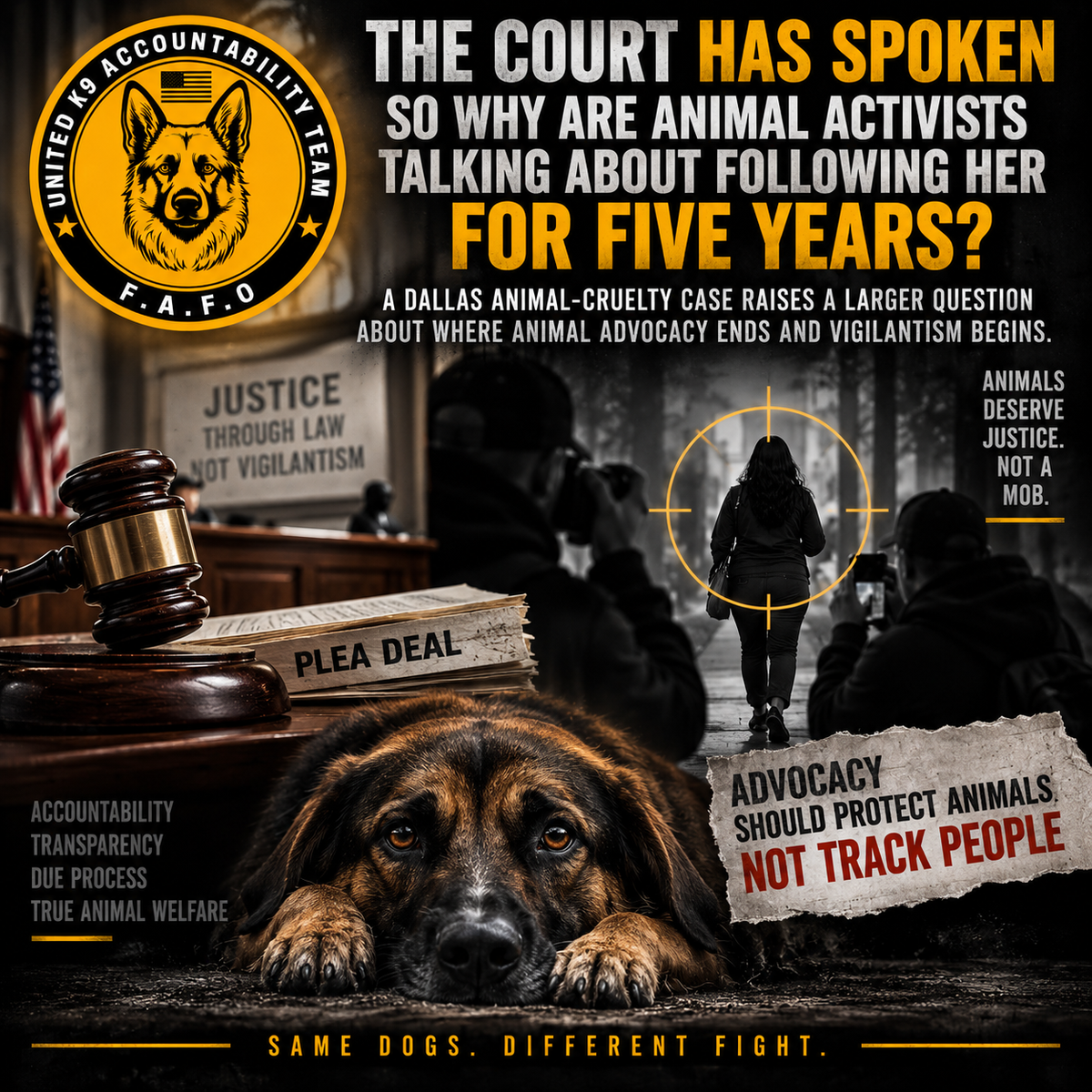
A Dallas animal-cruelty case raises a larger question about where animal advocacy ends and private vigilantism begins.
DALLAS, TEXAS — A highly publicized animal-cruelty case in North Texas has reached a resolution through a plea agreement. But comments made by animal activists following that resolution are now raising an entirely different concern.
What happens when activists disagree with the outcome of a criminal case and decide the punishment imposed through the justice system isn't enough?
The case involves Turkessa Blackmon, who was arrested in Dallas in October 2025 after video circulated online that authorities alleged showed a stray dog being beaten. CBS Texas reported that Blackmon, then 49, was charged with cruelty to non-livestock animals, a third-degree felony.
The incident generated significant attention from animal activists, some of whom closely followed the criminal case and wanted a severe punishment.
But the case ultimately did not end with the trial some activists apparently wanted.
It ended with a plea deal.
The Plea Deal
According to a public social-media post from animal activists following the court proceedings, Blackmon accepted a plea agreement.
The post stated that Blackmon received five years of probation, although the person writing it also acknowledged not having read all of the specific terms of her probation.
Because we have not independently reviewed the complete plea agreement or final judgment, we won't speculate about conditions that aren't documented before us.
What we do know from the activists' own account is that a plea deal was reached and they were deeply unhappy with the result.
That is their right.
Americans are free to criticize prosecutors, judges, plea bargains and criminal sentences. Animal advocates can argue that animal-cruelty penalties are inadequate. They can petition lawmakers, protest peacefully, attend court proceedings and advocate for legislative reform.
But disagreement with a court's resolution does not give private citizens authority to impose their own form of supervision afterward.
And that's where this story takes a concerning turn.
Animal Activists Say They Will “Follow Around” the Defendant
Following the reported plea agreement, an animal activist made this public statement:
“So now we get to follow around Turkessa for 5 years to make sure she doesn’t violate her probation.”
That statement deserves attention independent of the original animal-cruelty allegations.
This wasn't merely a declaration that activists would continue advocating for animals.
It wasn't a promise to monitor public court records.
It wasn't a statement that they would hold government agencies accountable for properly supervising probation.
It specifically talked about following around an individual for five years.
That raises an important question:
Since when did private animal activists become probation officers?
The Government Supervises Probation — Not Activists
Whatever anyone thinks about the plea agreement, probation is part of the criminal-justice system.
Courts impose its conditions. Government agencies supervise those conditions. If a defendant violates probation, there are established procedures for determining whether a violation occurred and what consequences should follow.
Private citizens don't acquire those powers simply because they believe the court should have imposed a harsher punishment.
There is also an important distinction between reporting something you happen to witness and deliberately following someone around looking for something to report.
If an activist witnesses a new act of animal cruelty, that person can contact law enforcement just like anyone else.
But intentionally following a specific person for years in an effort to discover a violation raises entirely different questions about privacy, harassment, intimidation and vigilantism.
Animal Advocacy Has Legal Boundaries
Protecting animals can be an important public cause.
But no cause places its supporters above the law.
The same legal system that prohibits animal cruelty also establishes rules governing criminal investigations, prosecutions, sentencing and probation.
Animal activists don't receive special investigative authority because their motivation involves protecting animals.
And disagreement with a judge, prosecutor or plea agreement doesn't create that authority either.
This distinction becomes especially important when activism becomes focused not on government policy but on an individual citizen.
There is nothing improper about attending a public hearing.
There is nothing improper about obtaining public records.
There is nothing improper about criticizing a sentence.
There is nothing improper about advocating for stronger animal-cruelty laws.
But physically following someone, repeatedly monitoring their movements or organizing private citizens to watch them can raise much more serious legal and ethical issues depending on what actually occurs.
A social-media statement alone does not establish that anyone has committed stalking, harassment or another crime. Actual conduct and the circumstances surrounding it would matter.
But announcing an intention to follow someone for five years should nevertheless cause people to ask where the boundaries are.
A Plea Deal Isn't Permission for a Second, Private Sentence
People may hate the outcome of a criminal case.
That doesn't invalidate it.
Plea agreements are a routine part of the American criminal-justice system. Prosecutors evaluate evidence, witnesses, potential defenses, available punishment and the risks associated with trial before determining whether to offer one.
The public rarely possesses every piece of information available to the parties.
That doesn't mean prosecutors are beyond criticism. It means disagreement with the outcome doesn't allow outsiders to substitute themselves for the justice system.
Blackmon went through the criminal process and reportedly accepted a plea agreement.
If five years of probation was part of that agreement, then those five years will be governed by the conditions imposed through the justice system.
There isn't supposed to be another unofficial condition:
Five years of being followed by private activists.
You Can Condemn Animal Cruelty and Still Defend Due Process
This shouldn't require choosing between animals and constitutional principles.
Someone can look at allegations of an animal being beaten and find them horrifying.
Someone can believe animal-cruelty laws should carry serious consequences.
Someone can even believe this particular plea agreement was far too lenient.
And that same person can still say:
Private citizens should not take the administration of criminal punishment into their own hands.
That isn't defending animal cruelty.
It's defending the rule of law.
Where Does Animal Advocacy End?
This case presents a question that extends far beyond one defendant or one animal-cruelty prosecution.
Animal activists frequently demand accountability from government and sometimes government absolutely deserves that scrutiny.
But accountability works both ways.
When activists begin talking publicly about following individual citizens for years because they don't approve of what happened in court, the public should scrutinize that behavior too.
The justice system isn't supposed to operate according to who can assemble the loudest group on social media.
Courts determine sentences.
Government authorities supervise probation.
Citizens report crimes.
Activists advocate for change.
Those boundaries exist for a reason.
Because once private groups decide that a lawful sentence isn't enough and that they will personally continue monitoring the defendant until they are satisfied, we aren't simply discussing animal welfare anymore.
We are confronting a much larger question:
When does animal advocacy stop being advocacy and start becoming vigilantism?